Yes, loud noise at work can cause much more than hearing loss. Prolonged exposure to workplace noise is linked to a range of serious health effects, including elevated stress hormones, cardiovascular strain, disrupted sleep, reduced concentration, and mental fatigue. These effects can build up over time without workers even noticing. Below, we break down exactly what the research tells us and what you can do about it.
What other health problems can loud noise at work cause?
Beyond hearing damage, loud workplace noise is associated with cardiovascular problems, chronic stress, sleep disturbances, and increased accident risk. When the body is repeatedly exposed to high noise levels, it triggers a physiological stress response that puts strain on multiple systems over time, not just the ears.
The most well-documented non-auditory effects of occupational noise include:
- Cardiovascular strain: Sustained noise exposure raises blood pressure and increases heart rate, which over years can contribute to hypertension and heart disease.
- Hormonal disruption: Loud noise triggers the release of stress hormones like cortisol and adrenaline. Chronic elevation of these hormones affects immune function, digestion, and sleep.
- Sleep problems: Workers exposed to high noise levels during the day often report difficulty falling asleep and staying asleep, even when their environment is quiet at night.
- Increased injury risk: Noise masks warning signals and makes communication harder, which raises the likelihood of workplace accidents.
- Tinnitus: A persistent ringing or buzzing in the ears that often accompanies noise-induced hearing damage and can significantly reduce quality of life.
These effects tend to compound. A worker dealing with fatigue, elevated stress, and disrupted sleep is more vulnerable across the board, making early protection more important than most people realize.
How does workplace noise affect mental health and stress levels?
Workplace noise directly activates the body’s stress response, even when workers consciously tune it out. The brain continues to process noise as a potential threat, keeping the nervous system in a low-grade state of alertness. Over time, this persistent activation contributes to anxiety, irritability, emotional exhaustion, and burnout.
This happens because the auditory system is hardwired to stay alert. Loud or unpredictable noise, like the kind found on manufacturing floors, construction sites, or busy warehouses, keeps the amygdala (the brain’s threat-detection center) active. Workers may not feel consciously stressed, but their bodies are responding as if they are.
The mental health impact of how noise affects worker health is often underestimated because it develops gradually. Workers adapt behaviorally, raising their voices, tensing their muscles, and withdrawing from conversation, but the underlying physiological toll continues to accumulate. Studies in occupational health consistently show that workers in high-noise environments report lower job satisfaction, higher rates of anxiety, and greater emotional fatigue than those in quieter settings.
Can noise at work hurt your concentration and productivity?
Yes, noise at work measurably reduces concentration and productivity. Unpredictable or loud background noise competes with the brain’s ability to focus on tasks, increasing the mental effort required to complete them. This leads to more errors, slower work, and greater mental fatigue by the end of the day.
The effect is especially pronounced for tasks that require reading, problem-solving, or verbal communication. Even noise levels that feel tolerable can degrade performance on complex tasks because the brain is simultaneously processing the noise and the task, splitting cognitive resources.
For workers in physically demanding roles, the impact on concentration also raises safety concerns. Missing an instruction or failing to hear a warning signal because of background noise is not just an inconvenience; it can be genuinely dangerous. Reducing noise exposure, even partially, has been shown to improve alertness, reduce error rates, and lower end-of-day fatigue.
What noise level at work is considered dangerous?
In the United States, the Occupational Safety and Health Administration (OSHA) sets the permissible exposure limit at 90 dB averaged over an 8-hour workday. The National Institute for Occupational Safety and Health (NIOSH) recommends a more conservative limit of 85 dB. Exposure above these levels without protection risks permanent hearing damage.
To put those numbers in context:
- Normal conversation sits around 60 dB
- A busy factory floor typically ranges from 85 to 100 dB
- Heavy machinery, power tools, and construction equipment often exceed 100 dB
- Some industrial equipment peaks above 110 dB
The damage is not just about peak volume. Duration matters just as much. OSHA uses a time-weighted average, meaning that the louder the environment, the shorter the safe exposure window. At 95 dB, the permissible exposure drops to four hours. At 100 dB, it drops to two. Workers in loud environments who are not wearing protection are often accumulating damage without realizing it, because the effects are gradual and painless until significant hearing loss has already occurred.
How can you protect yourself from noise at work?
The most effective way to protect yourself from noise at work is to wear properly rated hearing protection consistently throughout your shift. Other practical steps include limiting time near the loudest equipment, using quieter tools when available, and advocating for engineering controls like noise barriers or enclosures where possible.
When it comes to personal protection, the quality of your earplugs matters more than most workers expect. Foam earplugs can block sound effectively but muffle communication, making it harder to hear colleagues or warning signals, which leads many workers to remove them. That defeats the purpose entirely.
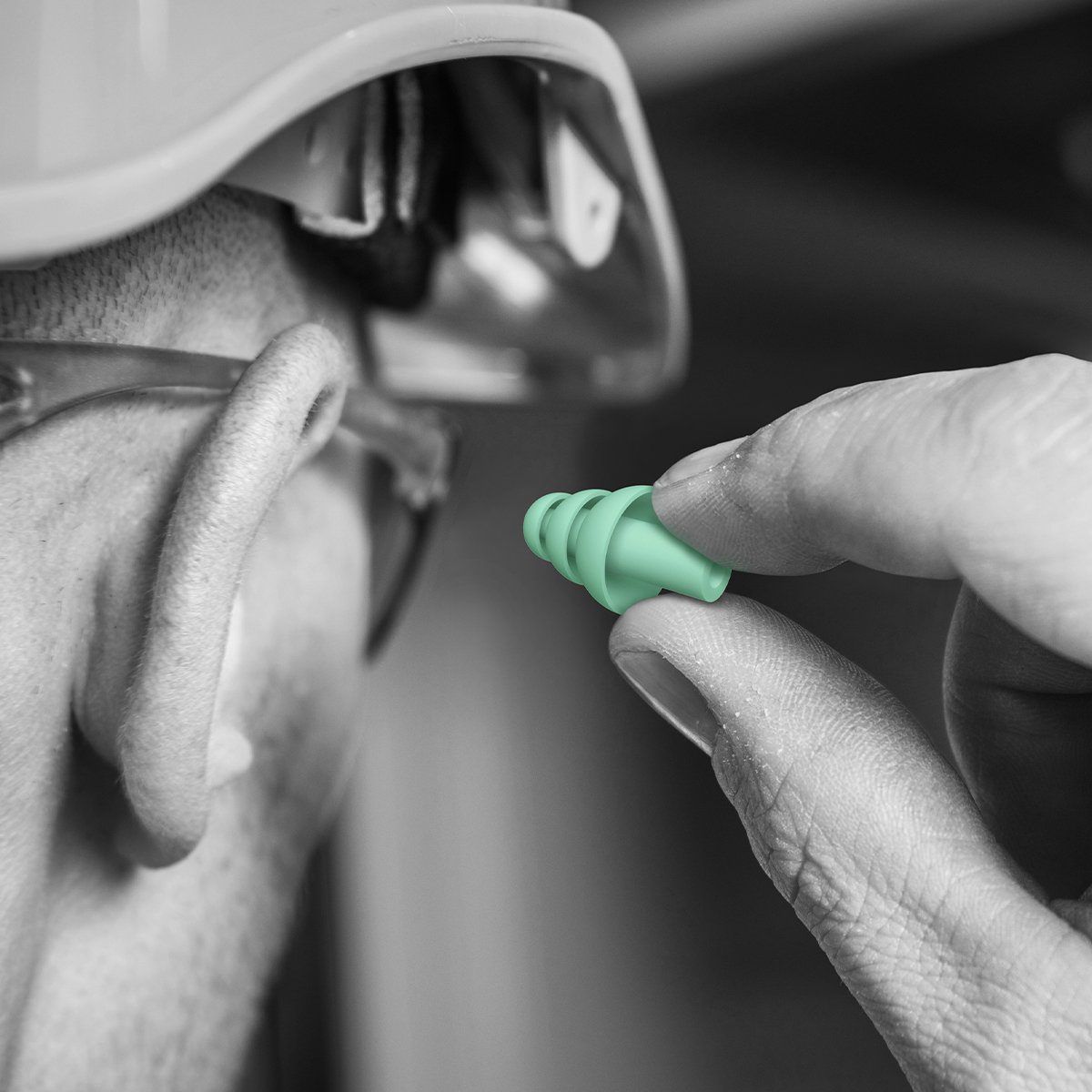
High-fidelity earplugs solve this problem by reducing overall volume while preserving sound clarity. Our Shush Worker earplugs are designed specifically for this challenge. With an SNR rating of 23 dB, they reduce hazardous industrial noise to safe levels while keeping sound natural and clear, so you can still communicate with colleagues without pulling them out. They are made from durable, hypoallergenic synthetic rubber that lasts at least 365 days, making them a practical and cost-effective choice for daily use. The ceramic filter inside each earplug, a design unique to us, preserves sound quality in a way that standard silicone or foam alternatives simply cannot match.
Beyond earplugs, building good habits around noise exposure is important. Take breaks in quiet areas when possible, monitor how your ears feel throughout the day, and treat early warning signs like ringing or muffled hearing after a shift as signals that your current protection is not enough.
Preguntas frecuentes
How do I know if my current hearing protection is actually working well enough?
The clearest warning signs that your protection isn't adequate are ringing ears (tinnitus), muffled hearing, or a sense of fullness in your ears after a shift — these are signals that too much noise is getting through. You should also check the Noise Reduction Rating (NRR) or SNR rating on your earplugs and compare it to the decibel levels in your work environment. If you're regularly working above 85 dB and your protection doesn't bring your exposure below that threshold, it's time to upgrade. A workplace audiologist or safety officer can conduct a fit test to confirm whether your earplugs are sealing correctly.
Can the non-auditory health effects — like high blood pressure or stress — be reversed if I reduce my noise exposure?
In many cases, yes — especially if the exposure is reduced before serious damage has set in. Research suggests that cardiovascular markers like elevated blood pressure and stress hormone levels can improve when workers are moved to quieter environments or consistently use effective hearing protection. Sleep quality and mental fatigue often show noticeable improvement relatively quickly once noise exposure is controlled. However, the longer the exposure has gone unaddressed, the more difficult full recovery becomes, which is why early intervention matters so much.
What if my employer doesn't provide hearing protection or take noise hazards seriously?
Under OSHA regulations, employers are legally required to implement a hearing conservation program when workers are exposed to noise at or above 85 dB as an 8-hour time-weighted average — this includes providing hearing protection at no cost to employees. If your employer is not meeting this obligation, you have the right to file a confidential complaint with OSHA at osha.gov, and retaliation against workers who report hazards is illegal. In the meantime, investing in your own high-quality earplugs is a practical step you can take immediately to protect yourself while the workplace situation is being addressed.
Are some workers more vulnerable to noise-related health effects than others?
Yes, certain factors can make individuals more susceptible to noise-induced damage. Workers who are also exposed to ototoxic chemicals — substances like certain solvents, pesticides, or heavy metals — face compounded hearing risk because these chemicals can amplify the damage noise causes. People with pre-existing cardiovascular conditions, anxiety disorders, or sleep problems may also experience more severe non-auditory effects from the same noise levels. Age is another factor, as hearing naturally becomes less resilient over time, making older workers more vulnerable to incremental noise damage.
How do high-fidelity earplugs differ from standard foam earplugs, and are they worth the extra cost?
Standard foam earplugs work by blocking as much sound as possible indiscriminately, which reduces volume but also muffle speech and warning signals — a major reason workers remove them mid-shift. High-fidelity earplugs use acoustic filters to attenuate sound more evenly across frequencies, bringing dangerous noise to a safer level while keeping voices and environmental sounds clear and natural. For workers who need to communicate, hear machinery cues, or stay situationally aware on the job, this distinction is critical — protection you actually keep in is far more effective than protection that gets pulled out. Given that a quality pair like Shush Worker earplugs lasts at least a year, the cost-per-day is typically lower than repeatedly replacing disposable foam pairs.
Can noise at work affect my sleep even if I work day shifts and sleep in a quiet bedroom?
Yes, and this is one of the most commonly overlooked effects of occupational noise exposure. Prolonged noise during the day keeps the nervous system in a heightened state of arousal, and that physiological activation doesn't immediately switch off when your shift ends. Elevated cortisol and adrenaline levels can persist into the evening, making it harder to wind down, fall asleep, and reach deep, restorative sleep stages — even in a completely quiet room. Workers who address their daytime noise exposure through consistent hearing protection often report gradual improvements in sleep quality as a secondary benefit.
What steps can I take right now to start reducing my noise exposure at work?
Start by identifying the loudest parts of your workday — the specific tasks, equipment, or areas where noise is highest — and prioritize protection during those windows. If you don't already have well-fitting, properly rated earplugs, that's the single highest-impact change you can make immediately. Beyond personal protection, simple behavioral adjustments help: take breaks in quieter areas when possible, position yourself farther from loud machinery when the task allows, and avoid stacking loud exposures (like listening to loud music during your commute on top of a noisy shift). If noise levels in your workplace haven't been formally measured, requesting a noise assessment from your employer or safety officer is a worthwhile next step.