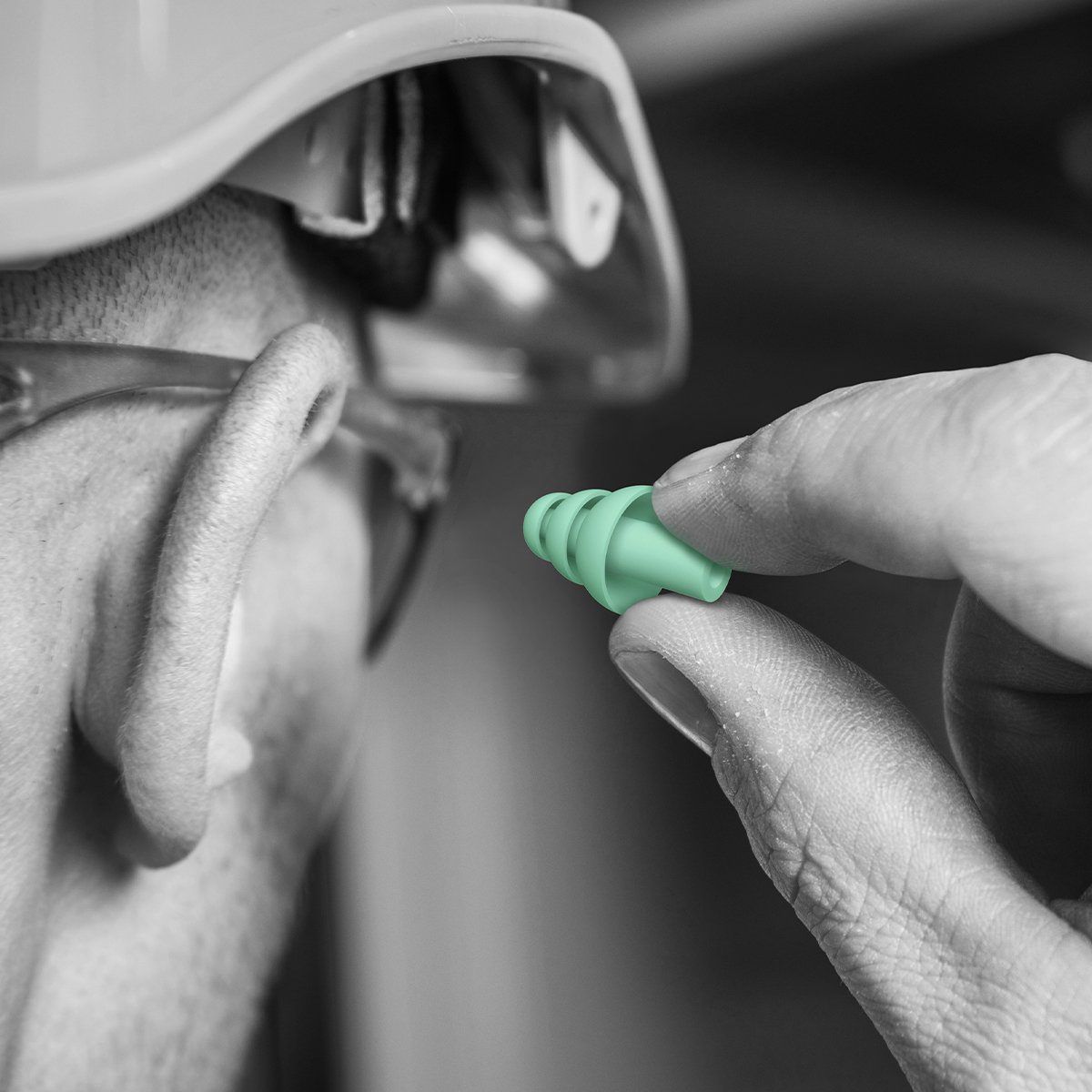
Yes, you can absolutely buy earplugs in bulk for employees. Most hearing protection suppliers offer multi-pack or bulk pricing for workplaces, and the options range from disposable foam plugs to reusable high-fidelity models designed for all-day wear. The right choice depends on your noise environment, how often workers need fresh protection, and your budget. Below, we cover the most common questions employers ask when sourcing bulk earplugs for their teams.
How many earplugs does a workplace typically need?
The number of earplugs a workplace needs depends on your workforce size, shift structure, and whether you choose disposable or reusable plugs. As a baseline, disposable earplugs are typically replaced daily or per shift, so a team of 20 workers on a five-day schedule needs at least 200 pairs per week. Reusable earplugs reduce that number significantly since each pair can last months or longer.
Beyond headcount, think about these factors when estimating your order volume:
- Shift length and frequency: Longer shifts or multiple daily shifts increase consumption for disposables.
- Loss and replacement rate: Workers lose or damage earplugs regularly, so building in a 10 to 20 percent buffer is practical.
- New hire onboarding: If your team is growing, factor in starter stock for incoming employees.
- Visitor and contractor access: Facilities that host outside workers often need a separate supply of guest earplugs near entry points.
For most small to mid-size operations, ordering in quantities of 50 to 200 pairs at a time strikes a good balance between having enough stock and avoiding waste from expired or degraded products sitting in storage.
What types of earplugs are available for bulk workplace orders?
Three main types of earplugs are available for bulk workplace orders: disposable foam plugs, reusable silicone or rubber plugs, and high-fidelity earplugs designed to reduce noise while preserving sound clarity. Each type suits different work environments and noise profiles, so understanding the differences helps you match the right product to your team’s actual conditions.
Disposable foam earplugs
Foam earplugs are the most widely used option in industrial settings. They compress for insertion and expand to fill the ear canal, offering solid noise reduction at a very low per-unit cost. The trade-off is hygiene and consistency: foam degrades quickly, collects dirt and moisture, and provides inconsistent protection if workers do not insert them correctly. They work well for short-duration tasks or as backup stock.
Reusable silicone and rubber earplugs
Reusable earplugs are made from silicone or synthetic rubber and can be cleaned and worn repeatedly. They typically cost more per unit upfront but deliver a lower cost per use over time. Rubber-based earplugs tend to have a higher density than silicone, which means they block more noise and hold their shape better through extended use. For workers wearing protection for multiple hours every day, comfort and durability matter as much as the noise reduction rating.
High-fidelity earplugs
High-fidelity earplugs use a filter to reduce volume evenly across frequencies, so speech and ambient sounds remain clear rather than muffled. This is especially valuable in workplaces where workers need to hear colleagues, instructions, or equipment warnings while still being protected. They are more expensive than foam but significantly reduce communication barriers that lead workers to remove their protection during shifts.
What noise level requires employers to provide hearing protection?
In the United States, OSHA requires employers to provide hearing protection when workers are exposed to noise levels at or above 85 decibels (dB) as an eight-hour time-weighted average. At 90 dB or above, providing hearing protection becomes mandatory rather than optional, and a full hearing conservation program must be in place.
To put those numbers in context, a typical conversation sits around 60 dB. A busy factory floor, heavy construction equipment, or power tools commonly reach 90 to 110 dB. Exposure at those levels without protection causes cumulative hearing damage that builds over months and years before workers notice it.
OSHA’s permissible exposure limits also factor in duration. The louder the environment, the shorter the safe exposure window:
- 90 dB: up to 8 hours
- 95 dB: up to 4 hours
- 100 dB: up to 2 hours
- 105 dB: up to 1 hour
- 110 dB: up to 30 minutes
If your workplace regularly exceeds 85 dB, conducting a noise assessment and documenting your hearing protection program is both a legal obligation and a practical step toward protecting your team’s long-term health.
Are reusable earplugs more cost-effective than disposables for bulk orders?
Yes, reusable earplugs are generally more cost-effective than disposables for bulk orders when workers use hearing protection daily or near-daily. While the upfront cost per pair is higher, the cost per use drops substantially over the product’s lifespan. A reusable pair that lasts 365 days of regular use costs a fraction of replacing disposable foam plugs every shift.
Here is a practical way to compare the two:
- Disposable foam: Low unit cost, but daily replacement adds up fast. A team of 30 workers replacing plugs five days a week generates thousands of pairs of waste per year.
- Reusable rubber or silicone: Higher upfront cost, lower ongoing spend. One pair per worker per year (with a small buffer for losses) is a realistic target for quality reusable plugs.
There is also a sustainability angle worth considering. Disposable earplugs generate significant plastic and foam waste over time. Reusable options reduce that footprint considerably, which matters to companies with environmental commitments or reporting obligations.
The one scenario where disposables make more sense is intermittent or irregular use, such as occasional contractor visits or tasks that only occasionally exceed noise thresholds. In those cases, the lower upfront cost and no cleaning requirement make disposables a practical choice.
Where can you buy earplugs in bulk for employees?
You can buy earplugs in bulk for employees through safety supply distributors, industrial equipment retailers, and directly from hearing protection brands online. Each channel has different advantages depending on how much you need, how quickly you need it, and whether you want standard commodity plugs or a specific product suited to your noise environment.
Common purchasing channels include:
- Safety supply distributors: Companies like Grainger or Uline carry large volumes of disposable and reusable earplugs and often offer account pricing for regular buyers.
- Industrial retailers: Big-box stores with a safety section stock foam earplugs in bulk packs, though the selection is typically limited to a few standard options.
- Direct from the brand: Buying directly from the manufacturer often gives you access to the full product range, technical specs, and better support if you need to match protection levels to a specific noise environment.
If you are looking for reusable, high-fidelity hearing protection for a professional setting, our Shush Worker earplugs are built for exactly that. With an SNR of 23 dB, a durable hypoallergenic rubber construction, and at least 365 days of reusability, they are designed for workers who need protection they can actually wear all day without removing them to communicate. They are independently certified to EU, US, Canadian, and Australian standards, making them a straightforward choice for workplaces with compliance requirements.
Preguntas frecuentes
How do I know if the earplugs I'm buying actually meet OSHA compliance standards?
Look for earplugs that carry a Noise Reduction Rating (NRR) certified by the American National Standards Institute (ANSI). The NRR tells you how many decibels of noise reduction the earplug provides under tested conditions. OSHA recommends using a derating formula — typically cutting the NRR in half — to estimate real-world protection, so if your environment hits 100 dB, you want an NRR high enough to bring effective exposure below 90 dB even after derating. Always request documentation from the supplier confirming the product meets ANSI S3.19 or equivalent certified testing standards.
What's the best way to get employees to actually wear their earplugs consistently?
Comfort and communication are the two biggest reasons workers remove their earplugs mid-shift, so choosing the right type of earplug for your environment matters more than most employers realize. Foam plugs that muffle speech and feel uncomfortable after an hour will get pulled out; high-fidelity or well-fitted reusable plugs that allow workers to hear conversations are far more likely to stay in. Pairing the right product with brief hands-on training on proper insertion technique — and making hearing protection a visible part of your safety culture — significantly improves consistent use.
How should bulk earplugs be stored to keep them in good condition?
Disposable foam earplugs should be stored in a cool, dry location away from direct sunlight and humidity, ideally in their original sealed packaging until use, since foam degrades when exposed to moisture and oils over time. Reusable earplugs should be kept in a clean, ventilated case between uses and inspected regularly for cracks, hardening, or discoloration that signal it's time to replace them. Avoid storing large quantities loose in open bins in high-traffic areas, as this increases contamination and loss rates.
Can one type of earplug work for all the different noise zones in my facility?
Not always — and using a one-size-fits-all approach can either over-protect workers in moderate noise zones (causing communication issues) or under-protect them in high-intensity areas. A practical approach is to conduct a noise assessment by zone and match earplug NRR levels accordingly, using high-fidelity reusable plugs for areas where communication is critical and higher-NRR options for extreme noise environments. Some workplaces also combine earplugs with earmuffs (dual protection) in areas that consistently exceed 100 dB.
What's a reasonable budget to plan for when buying bulk earplugs for a team of 25 workers?
For a team of 25 workers using disposable foam earplugs daily, budget roughly $150 to $400 per month depending on the brand and volume pricing, factoring in a 15 percent buffer for losses and replacements. If you switch to quality reusable earplugs, your annual spend per worker typically drops to $10 to $30 per person once you account for the initial purchase and minimal replacements throughout the year. Requesting a quote directly from a supplier or brand for your specific headcount is the fastest way to get accurate pricing, and many offer tiered discounts starting at orders of 50 pairs or more.
Do I need to keep records of the hearing protection I provide to employees?
Yes — if your workplace requires a hearing conservation program under OSHA (triggered at noise exposures at or above 85 dB as an eight-hour time-weighted average), you are required to maintain records of noise exposure measurements, audiometric test results, and the hearing protection provided to workers. Keeping purchase records, documenting which products are issued to which employees, and logging any training sessions creates a clear paper trail that protects your business during an OSHA inspection. Even for workplaces below the mandatory threshold, maintaining basic records is a best practice that supports your overall safety documentation.
Are there earplugs designed for workers with smaller or larger ear canals, and can I order those in bulk?
Yes, most reputable hearing protection brands offer earplugs in multiple sizes — typically small, medium, and large — and many bulk suppliers allow you to order assorted size packs or specify sizes at checkout. Proper fit is critical because an earplug that doesn't seal correctly can reduce effective noise protection by 50 percent or more regardless of its rated NRR. If you're outfitting a large team, consider requesting a sample kit from the supplier so workers can test fit before you commit to a full bulk order.